Cookie Science Guide
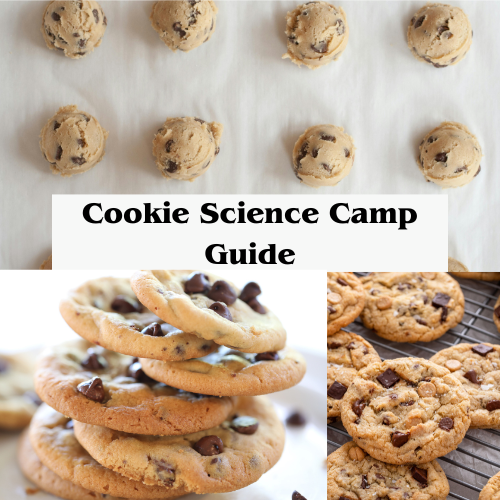
Use the info below to spark creativity in recipe creation!
Flour
Flour is the foundation of a cookie. It provides the structure that helps the cookie hold its shape. When flour is mixed with the water in butter and eggs, proteins in wheat flour join together to form gluten. Gluten is a stretchy network that helps hold the cookie together while it bakes.
As the dough is mixed, more gluten forms. Mixing just until the ingredients are combined helps keep cookies tender. Overmixing develops extra gluten, which can make cookies tougher.
What Happens If You Add More Flour?
Adding more flour usually makes cookies:
Thicker
Taller
Less likely to spread
Drier or more crumbly
Why?
Flour absorbs water from the butter and egg. When extra flour is added, there is less free moisture in the dough, making it firmer. A firmer dough spreads less before it sets in the oven. More flour also creates a stronger gluten network, giving the cookie more structure so it can hold a thicker shape.
What Happens If You Add Less Flour?
Using less flour usually makes cookies:
Thinner
Wider
Softer
More likely to fall apart
Why?
With less flour, there is less structure to support the cookie. As the butter melts in the oven, the softer dough spreads farther before it has a chance to set. Because less gluten forms, the cookie is also more delicate and may crumble more easily.
Different Types of Flour
All-Purpose Flour
The best all-around choice for most cookies.
Contains a moderate amount of protein, making cookies that are both tender and sturdy.
Bread Flour
Contains more protein than all-purpose flour.
More protein allows a stronger gluten network to form.
Cookies are often thicker, chewier, and slightly less crumbly.
Whole Wheat Flour
Contains the entire wheat kernel, including the bran and germ.
Absorbs more water than all-purpose flour.
Gives cookies a heartier texture and a slightly nutty flavor.
The bran particles interrupt some of the gluten network, so cookies are often a little less tender and may spread slightly less.
Cake Flour
Contains less protein than all-purpose flour.
Forms less gluten.
Cookies are often softer, more delicate, and more tender, but they may spread a little more.
Gluten-Free Flour Blend
Gluten-free flours do not form gluten like wheat flour.
Most gluten-free baking blends combine several flours and starches, such as rice flour, potato starch, and tapioca starch. Many also include xanthan gum to help replace some of gluten's job.
Depending on the blend, cookies may be softer, more delicate, more crumbly, or slightly sandier in texture.
Because gluten-free flour blends are made from different ingredients, they do not all behave the same. Two different brands can produce noticeably different cookies.
Measure correctly:
Professional bakers often weigh flour instead of measuring it with cups. It’s also how I love to measure when doing large batches of bread/anything requiring more than a few cups. If not weighing flour then ALWAYS spoon flour and then level. NEVER pack it or just scoop with measuring cup. Even an extra few tablespoons of flour can make cookies noticeably thicker and less chewy.
Butter
Butter gives cookies flavor, tenderness, and moisture. It is about 80% fat, 16–18% water, and a small amount of milk solids. Each part plays a role in how a cookie bakes.
The fat coats some of the flour, which limits how much gluten forms. This helps keep cookies tender instead of tough.
The water in butter combines with the flour to help form gluten, which gives the cookie structure.
As butter melts in the oven, it helps the dough spread before the cookie sets.
Butter vs. Margarine
Butter and margarine can both be used to make cookies, but they are not exactly the same.
Butter
Made from cream.
Contains about 80% fat, along with water and milk solids.
Produces a rich, buttery flavor.
The milk solids help butter brown and develop deeper flavors.
Margarine
Usually made from vegetable oils.
Different brands contain different amounts of fat and water.
Some margarines are made for spreading on toast, while others are made for baking.
How Do Cookies Change?
Cookies made with margarine may:
Spread more or less, depending on the brand.
Be softer or more cake-like if the margarine contains more water.
Have a milder flavor than butter.
Brown differently because margarine does not contain the same milk solids as butter.
Why?
Butter has a fairly consistent composition, so recipes using butter behave more predictably. Margarine recipes are harder to predict because different brands have different amounts of fat, water, and emulsifiers. More water can create extra steam and more gluten, while less fat means the dough may not spread or brown the same way.
If a recipe calls for butter and you choose margarine instead, look for a stick margarine made for baking with about 80% fat. Soft margarine sold in tubs usually contains more water, so it may change the texture and spread of the cookies more noticeably.
I personally prefer butter over margarine and the rest of this section will be on butter.
What Happens If You Add More Butter?
Adding more butter usually makes cookies:
Thinner
Wider
Richer in flavor
Softer or chewier
More likely to spread too much
Why?
Extra butter adds more fat to the dough. As the butter melts in the oven, the softer dough spreads farther before the flour and egg proteins have time to set. If there is too much butter, cookies may become greasy or too thin because there is not enough flour to support them.
What Happens If You Add Less Butter?
Using less butter usually makes cookies:
Thicker
Drier
Less tender
Less rich in flavor
Why?
With less butter, the dough is firmer and does not spread as much. Because there is less fat coating the flour, the cookie can also become tougher and drier.
Different Butter Temperatures
Softened Butter
Soft enough to press with your finger but not melted.
Traps tiny air bubbles when beaten with sugar.
Usually produces cookies with a balanced texture and moderate spread.
Why?
When softened butter is creamed with sugar, the sharp edges of the sugar crystals create tiny air pockets in the butter. These air pockets expand in the oven, helping give cookies a lighter texture.
Cold Butter
Melts more slowly in the oven.
Is harder to cream with sugar.
Often produces cookies that spread less and stay thicker.
Why?
Cold butter cannot trap air as easily during mixing. It also takes longer to melt in the oven, giving the flour and eggs more time to set before the cookie spreads very far.
Melted Butter
Cannot trap air during mixing.
Often produces cookies that are flatter, denser, and chewier.
Why?
When butter is melted before mixing, the air pockets that normally form during creaming cannot develop. The dough starts out softer, so it spreads more easily in the oven. Because there is less trapped air, the finished cookie is usually denser and chewier.
Salted vs. Unsalted Butter
Unsalted Butter
Lets you control exactly how much salt is in the recipe.
Used in most baking recipes and recipe testing.
Salted Butter
Contains added salt, but the amount varies by brand.
Can be used in cookies, but the flavor may change slightly depending on how much salt the butter contains.
Bonus: Browned Butter
Browned butter is made by melting butter and continuing to cook it until the water evaporates and the tiny milk solids at the bottom of the pan turn golden brown.
What Happens When You Use Browned Butter?
Browned butter usually makes cookies:
Richer in flavor
More nutty or caramel-like
Slightly chewier
Often a little flatter if no water is added back
Why?
As butter browns, the milk solids go through the Maillard reaction, the same chemical reaction that gives toasted bread, roasted marshmallows, and seared steak their delicious browned flavors. This creates hundreds of new flavor compounds that give browned butter its rich, nutty taste.
Browning butter also removes some of its water as steam. Since there is less water left in the butter, the dough contains less moisture. If a recipe simply swaps browned butter for regular butter without replacing the lost water, the cookies may spread a little differently and have a slightly chewier texture.
Many bakers weigh the butter before and after browning or add back a small amount of water to replace what was lost. This keeps the amount of fat and moisture closer to the original recipe while still adding the delicious browned butter flavor. You can also make the butter and then place in fridge (or freezer) to cool and return to soften butter consistency or even all the way to cold if you like that result in your cookies.
Sugar
Sugar does much more than make cookies sweet. It affects how cookies spread, brown, hold moisture, and feel when you eat them.
The two most common sugars in cookies are granulated sugar (white sugar) and brown sugar. Many cookie recipes use a combination of both because each one contributes something different.
What Does Sugar Do?
Sugar helps:
Sweeten cookies.
Keep cookies moist.
Create a tender texture.
Help cookies spread.
Create a golden-brown color.
Add crispness or chewiness, depending on the type of sugar used.
Why?
Sugar dissolves into the moisture in the dough. As the cookies bake, dissolved sugar delays when the dough sets, giving the butter more time to melt and the cookies more time to spread.
Sugar is also hygroscopic, which means it attracts and holds onto water. This helps cookies stay softer after baking.
Finally, sugar takes part in caramelization, a process where sugar is heated until it develops new flavors and a golden color. Sugar also contributes to the Maillard reaction, especially when combined with proteins from flour and eggs, helping create the rich flavors of baked cookies.
Granulated Sugar (White Sugar)
Granulated sugar is made from sugar cane or sugar beets and contains almost pure sucrose.
Cookies made with more granulated sugar usually are:
Thinner
Crispier
More likely to spread
Lighter in color
Crunchier around the edges
Why?
Granulated sugar dissolves readily during baking and allows the dough to spread before it fully sets. Because it contains no molasses, it contributes less moisture than brown sugar, so the finished cookies tend to dry out a little more as they cool, creating a crispier texture.
Brown Sugar
Brown sugar is granulated sugar with molasses added back.
The molasses gives brown sugar:
More moisture
A richer flavor
A darker color
Slight acidity
Cookies made with more brown sugar usually are:
Softer
Chewier
Slightly thicker
Darker
Richer in flavor
Why?
The molasses in brown sugar attracts and holds onto water, helping cookies stay moist for longer. Brown sugar is also slightly acidic, which works with baking soda and contributes to the cookie's rise and browning. The extra moisture helps create a softer, chewier texture.
What Happens If You Use All White Sugar?
Cookies usually become:
Flatter
Crispier
Lighter in color
Less chewy
Why?
Without the extra moisture from molasses, the dough dries more quickly as it bakes and cools. This creates a crispier cookie with less chewiness.
What Happens If You Use All Brown Sugar?
Cookies usually become:
Softer
Chewier
Darker
Slightly thicker
Richer in flavor
Why?
The extra moisture from molasses helps keep the cookies soft, while the slightly acidic molasses works with baking soda during baking. The additional moisture also slows drying after the cookies come out of the oven.
Light Brown Sugar vs. Dark Brown Sugar
Both contain molasses, but dark brown sugar contains more.
Light Brown Sugar
Mild caramel flavor.
Used in most chocolate chip cookie recipes.
Dark Brown Sugar
Stronger caramel and toffee flavor.
Produces darker cookies with a richer taste.
Can make cookies slightly softer because of the additional molasses.
Can You Replace One Sugar with the Other?
Yes, but the cookies will change.
Replacing white sugar with brown sugar makes cookies softer and chewier.
Replacing brown sugar with white sugar makes cookies crisper and thinner.
Many recipes use both because together they create a cookie that is crisp around the edges while staying soft and chewy in the center.
Tip:
If you forget to seal your brown sugar, it often becomes hard as a rock!
That's because water slowly evaporates from the molasses. The sugar crystals stick tightly together as they dry, forming one hard lump. Placing a marshmallow or two in the container can keep it from getting too hard. You can also put a damp piece of bread wrapped in a paper towel in a container of hard brown sugar to soften it, but be mindful when using that sugar for baking if someone has celiac or wheat allergy.
Eggs
Eggs are one of the hardest-working ingredients in cookie dough. They help hold the dough together, add moisture, create structure, and make cookies tender. They also add richness and help cookies brown as they bake.
A whole egg contains two very different parts:
The egg white, which is mostly water and protein.
The egg yolk, which contains fat, water, proteins, vitamins, minerals, and a natural emulsifier called lecithin.
Each part plays a different role in baking.
What Do Eggs Do?
Eggs help:
Hold the ingredients together.
Add moisture.
Build structure.
Make cookies tender.
Help cookies brown.
Keep fat and water mixed together.
Why?
As cookie dough heats in the oven, the proteins in the egg unfold and connect together. This creates a firm network that helps the cookie keep its shape.
The water in the egg creates steam as it heats, helping the cookie puff slightly.
The yolk contains lecithin, an emulsifier that helps combine ingredients that normally do not mix well, like butter and water. This creates a smoother dough and helps produce a more even texture.
What Happens If You Add Too Many Eggs?
Cookies may become:
Puffier
More cake-like
Chewier
Firmer
Less likely to spread
Why?
Extra eggs add more water and protein. More water creates additional steam during baking, while more protein builds a stronger structure as it cooks. Together, they help the cookie hold its shape and rise more instead of spreading.
What Happens If You Use Too Few Eggs?
Cookies may become:
Crumbly
Dry
More likely to fall apart
Flatter
Less chewy
Why?
With less egg, there is less protein to hold the cookie together and less moisture to keep it soft. The cookie becomes more fragile because it has less structure.
Whole Egg vs. Egg Yolk
Some recipes call for an extra egg yolk.
What Happens?
Cookies usually become:
Richer
Softer
Chewier
More tender
Why?
Egg yolks contain fat and lecithin. The extra fat helps keep cookies tender, while lecithin helps mix the ingredients evenly. Because an egg yolk contains less water than a whole egg, adding an extra yolk increases richness without adding as much moisture.
Whole Egg vs. Egg White
Some recipes call for extra egg whites.
What Happens?
Cookies usually become:
Puffier
Firmer
Slightly drier
More cake-like
Why?
Egg whites are mostly water and protein with almost no fat. The proteins create a stronger structure as they cook, making the cookie firmer and less tender than one made with extra yolks.
Why Are Eggs Usually Used at Room Temperature?
Most baking recipes recommend using room-temperature eggs.
Why?
Room-temperature eggs mix more easily into softened butter and sugar, creating a smoother dough. Cold eggs can cause softened butter to firm up into small lumps, making the dough less evenly mixed.
Can You Leave Eggs Out?
Not usually. In chocolate chip cookies you can and it will still taste good enough- but the structure and texture will change.
Eggs provide moisture, structure, and binding all at the same time. If you leave them out, cookies may spread differently, crumble more easily, or have a very different texture.
There are egg substitutes for people with egg allergies or who follow a vegan diet, but each substitute behaves differently and may change the final cookie.
Baking Soda and Baking Powder
You may notice that some cookie recipes use baking soda, some use baking powder, and some use both.
So why does our chocolate chip cookie recipe use baking soda instead of baking powder?
Chocolate chip cookies are usually meant to be chewy, slightly flat, and golden brown with crisp edges. Baking soda is especially good at creating those qualities because it reacts with the acidic ingredients in the dough (including the molasses in brown sugar) and raises the dough's pH. This helps the cookies spread a little more while creating deeper browning and richer baked flavors.
If this recipe used only baking powder instead, the cookies would likely be thicker, puffier, softer, and more cake-like.
Some cookie recipes use both baking soda and baking powder to combine the benefits of each.
Both baking soda and baking powder are leavening agents, which means they help baked goods rise by creating tiny bubbles of carbon dioxide gas. As the cookie bakes, these bubbles expand, making the cookie lighter instead of dense.
Even though they do the same job, they work in different ways.
Baking Soda
Baking soda is sodium bicarbonate. By itself, it does not produce carbon dioxide gas. It needs both moisture and an acid to react.
Common acids in cookie recipes include:
Brown sugar (because of the molasses it contains)
Buttermilk
Cocoa powder (natural, not Dutch-process)
Honey
Lemon juice or vinegar
Sour cream
Yogurt
When baking soda mixes with an acid and moisture, it begins producing carbon dioxide gas.
What Does Baking Soda Do?
Baking soda usually makes cookies:
Spread more
Brown more deeply
Have crispier edges
Taste less acidic
Why?
Baking soda raises the pH of the dough, making it more alkaline. A higher pH speeds up the Maillard reaction, which creates the golden-brown color and rich baked flavors people love in cookies. It also allows the cookies to spread a little more before they set.
What Happens If You Add Too Much Baking Soda?
Cookies may:
Spread too much
Taste bitter, metallic, or soapy
Become dark before they are fully baked
Why?
If there is more baking soda than the recipe has acid to react with, some baking soda is left over. That leftover baking soda can create an unpleasant taste and cause excessive browning.
What Happens If You Use Too Little Baking Soda?
Cookies may:
Spread less
Brown less
Taste slightly more acidic
Be denser
Why?
Less carbon dioxide is produced, so the cookies rise less. The dough also stays more acidic, slowing the browning reactions that create flavor and color.
Baking Powder
Baking powder contains baking soda, one or more powdered acids, and starch to keep everything dry until it is used.
Because it already contains both the base and the acid, baking powder only needs moisture and heat to begin working.
Most baking powder sold today is double-acting.
That means it produces carbon dioxide gas in two stages:
The first reaction begins when the batter or dough is mixed.
The second, larger reaction happens when the dough heats up in the oven.
This gives baked goods a more reliable rise.
What Does Baking Powder Do?
Baking powder usually makes cookies:
Puffier
Thicker
Softer
More cake-like
Why?
Because much of the carbon dioxide is produced after the dough enters the hot oven, the cookie gains height before it has time to spread very far.
What Happens If You Add Too Much Baking Powder?
Cookies may:
Puff up too much
Collapse after baking
Taste bitter
Have a dry or crumbly texture
Why?
Too much gas stretches the cookie's structure beyond what it can support. As the cookie cools, that structure may collapse.
Should I Use Baking Soda or Baking Powder?
It depends on the recipe.
Use Baking Soda When:
The recipe contains enough acidic ingredients for baking soda to react.
You want cookies that are chewier, flatter, crispier around the edges, and deeply browned.
Examples:
Chocolate chip cookies
Gingerbread cookies
Molasses cookies
Peanut butter cookies
Use Baking Powder When:
The recipe has very little acid.
You want cookies that are thicker, softer, and more cake-like.
Examples:
Some cut-out cookies
Some snickerdoodle recipes
Sugar cookies
Can Recipes Use Both?
Yes!
Many recipes use both baking soda and baking powder.
Why?
The baking soda reacts with acidic ingredients to improve browning, flavor, and spread, while the baking powder provides additional lift and helps create a thicker cookie. Using both lets bakers fine-tune the texture, height, and flavor of the finished cookie.
Note
Baking soda and baking powder are not interchangeable. Baking soda needs acidic ingredients to work, while baking powder already contains the acid it needs. Swapping one for the other without changing the recipe can dramatically change your cookies' texture, spread, browning, and flavor.
Vanilla Extract
Vanilla is often called a flavor enhancer because it makes other flavors taste richer and more balanced. Even though most cookie recipes only use a small amount, vanilla has a big impact on the finished cookie.
Vanilla comes from the seed pods, called beans, of a tropical orchid. The beans are cured for several months to develop the familiar vanilla flavor and aroma.
What Does Vanilla Do?
Vanilla helps:
Add sweetness to the flavor (without adding sugar)
Enhance chocolate, butter, and caramel flavors
Balance other flavors
Add a warm, rich aroma
Why?
Vanilla contains hundreds of natural flavor compounds. The most abundant is vanillin, but many other compounds contribute to the complex flavor of real vanilla. Together, these compounds interact with our sense of taste and smell, making cookies taste richer and more flavorful.
Much of what we think of as "taste" actually comes from our sense of smell. As warm cookies release vanilla's aroma, our brains perceive the cookies as sweeter and more flavorful.
What Happens If You Add More Vanilla?
Cookies may:
Have a stronger vanilla flavor
Taste richer and more aromatic
Why?
Adding more vanilla increases the amount of flavor compounds in the dough. However, after a certain point, adding even more vanilla has little additional effect because our senses can only detect so much flavor.
What Happens If You Leave Out the Vanilla?
Cookies will usually:
Still bake normally
Taste less rich
Have a flatter flavor
Why?
Vanilla does not affect the cookie's structure, rise, or spread. Instead, it enhances the flavors already present in the recipe, making butter, chocolate, and caramel notes more noticeable.
Pure Vanilla Extract vs. Imitation Vanilla
Pure Vanilla Extract
Made by soaking cured vanilla beans in alcohol and water.
Contains hundreds of natural flavor compounds.
Has a more complex flavor, especially in recipes where vanilla is the main flavor.
Imitation Vanilla
Usually made with manufactured vanillin, the main flavor compound found in vanilla.
Costs much less than pure vanilla.
Often tastes very similar in baked goods, especially chocolate cookies.
Which Is Better?
It depends on the recipe.
In cookies with lots of chocolate, brown sugar, or spices, many people cannot tell the difference between pure and imitation vanilla after baking.
In recipes where vanilla is the star flavor, such as sugar cookies, vanilla cakes, frostings, or vanilla ice cream, pure vanilla often has a richer, more complex taste.
Can Vanilla Burn Off in the Oven?
Some people think all of the vanilla disappears during baking, but that isn't true.
Why?
Vanilla extract contains alcohol, which evaporates quickly in the oven. However, many of the flavor compounds remain in the cookie, which is why baked cookies still have a delicious vanilla flavor.
Note:
Vanilla is the second most expensive spice in the world, after saffron. Vanilla orchids must be hand-pollinated in most places where they are grown, and each bean takes several months to develop and cure before it can be made into vanilla extract.
Salt
Even though cookies only contain a small amount of salt, it plays a very important role. Salt doesn't just make cookies salty—it helps balance sweetness, strengthen the dough, and make other flavors taste richer.
Without salt, many cookies taste flat or one-dimensional, even if they contain the same amount of sugar, butter, and chocolate.
What Does Salt Do?
Salt helps:
Balance sweetness
Enhance other flavors
Strengthen the dough
Improve texture
Help create a more balanced cookie
Why?
Salt reduces the perception of excessive sweetness while making flavors like butter, vanilla, and chocolate stand out more. This creates a cookie that tastes more balanced instead of simply sugary.
Salt also slightly strengthens the gluten network formed by the flour, helping the cookie hold together while still remaining tender.
What Happens If You Add Too Much Salt?
Cookies may:
Taste overly salty
Seem less sweet
Have an overpowering flavor
Why?
Too much salt overwhelms the other flavors in the cookie. Instead of enhancing the butter, vanilla, and chocolate, it begins to dominate what you taste.
What Happens If You Use Too Little Salt?
Cookies may:
Taste overly sweet
Have a bland or flat flavor
Seem less rich
Why?
Without enough salt, the sweetness can overpower the other ingredients. Butter, vanilla, and chocolate become less noticeable, making the cookie taste less balanced.
Different Types of Salt
Table Salt
Very fine crystals.
Dissolves quickly.
The most common salt used in baking recipes.
Kosher Salt
Larger crystals than table salt.
Dissolves more slowly.
Different brands have different crystal sizes, so equal volumes may not contain the same amount of salt.
Sea Salt
Made by evaporating seawater.
Comes in many crystal sizes.
Fine sea salt works much like table salt, while coarse sea salt is often used as a topping.
Can You Substitute One Type of Salt for Another?
Yes—but not always in the same amount.
Because different salts have different crystal sizes, one teaspoon of one salt may not weigh the same as one teaspoon of another.
When possible, use the type of salt listed in the recipe or measure salt by weight for the most consistent results.
What Is Flaky Sea Salt?
Flaky sea salt is a type of sea salt made of large, thin, delicate crystals. Unlike table salt, which has tiny, uniform grains, flaky sea salt forms light, crisp flakes that easily crumble between your fingers.
Because the flakes are much larger, they dissolve more slowly on your tongue than fine salt.
Why Do Bakers Sprinkle It on Cookies?
The crunchy flakes create small bursts of salt that make the chocolate, butter, and caramel flavors taste even richer. The contrast between sweet and salty makes each bite more flavorful.
Since the flakes stay on the surface instead of dissolving into the dough, they also add a slight crunch and make the cookies look beautiful.
Note:
Humans can detect five basic tastes: sweet, salty, sour, bitter, and umami. Salt is unique because it doesn't just add its own salty taste—it also changes how we experience many of the other flavors in a cookie, making them seem richer and more balanced.
Chocolate Chips
Chocolate chips are often the star ingredient in chocolate chip cookies, but they do more than simply add chocolate flavor. The type, size, and amount of chocolate you use can change the taste, texture, and even how the cookies spread.
Chocolate is made from cocoa beans, which are actually the seeds of the cacao fruit. After the beans are fermented, dried, roasted, and ground, they become chocolate.
What Do Chocolate Chips Do?
Chocolate chips help:
Add chocolate flavor
Add sweetness or bitterness, depending on the type of chocolate
Create pockets of melted chocolate
Add texture and contrast
Why?
Unlike flour, eggs, or baking soda, chocolate chips do not build the structure of the cookie. Instead, they create bursts of flavor and texture throughout each bite.
As the cookies bake, the chocolate softens and melts. When the cookies cool, the chocolate hardens again, giving each bite a different texture than the cookie itself.
What Happens If You Add More Chocolate Chips?
Cookies usually become:
More chocolatey
Slightly thicker
More difficult to spread evenly
Richer in flavor
Why?
Chocolate chips take up space in the dough. As you add more chips, they physically get in the way of the dough spreading, which can make cookies slightly thicker. More chocolate also means more pockets of melted chocolate in every bite.
What Happens If You Use Fewer Chocolate Chips?
Cookies usually become:
Less chocolatey
Slightly thinner
More uniform in texture
Why?
With fewer chocolate chips, there is less solid material interrupting the dough as it spreads. The cookie itself becomes the main texture instead of alternating between cookie and chocolate.
Milk Chocolate Chips
Milk chocolate contains cocoa solids, cocoa butter, sugar, and milk.
Cookies made with milk chocolate usually taste:
Sweeter
Creamier
Milder
Milk chocolate melts easily because it contains more milk and sugar than darker chocolates.
Semisweet Chocolate Chips
Semisweet chocolate is the most common choice for chocolate chip cookies.
Cookies made with semisweet chocolate usually have:
A balanced sweetness
A rich chocolate flavor
The classic chocolate chip cookie taste
Semisweet chocolate pairs well with both white sugar and brown sugar, which is why it is used in many traditional recipes.
Dark Chocolate Chips
Dark chocolate contains a higher percentage of cocoa solids and less sugar.
Cookies made with dark chocolate usually taste:
Richer
Less sweet
More intensely chocolatey
Many people enjoy dark chocolate because it balances the sweetness of the cookie dough.
White Chocolate Chips
White chocolate is made from cocoa butter, sugar, and milk solids, but it does not contain cocoa solids.
Cookies made with white chocolate usually taste:
Sweeter
Creamier
More buttery
Because it contains no cocoa solids, white chocolate has a very different flavor from milk, semisweet, or dark chocolate.
Chocolate Chips vs. Chocolate Chunks
Both work well, but they create different cookies.
Chocolate Chips
Hold their shape well during baking.
Create small pockets of chocolate throughout the cookie.
Chocolate Chunks
Melt into larger pools.
Create gooier bites with more melted chocolate.
Why?
Many chocolate chips are formulated to hold their shape while baking. Chunks cut from a chocolate bar often melt more easily because they contain a different balance of cocoa butter and are not designed to keep their shape.
Can You Mix Different Chocolates?
Absolutely!
Many bakers combine semisweet, dark, milk, or white chocolate in the same cookie.
Why?
Each type of chocolate has a different level of sweetness and cocoa flavor. Mixing them creates a more complex flavor and gives every bite a little variety.
Note:
Many chocolate chips are specially made to soften while baking but still hold much of their shape. That's why a warm chocolate chip cookie often has soft, melty chips instead of chocolate spreading throughout the cookie.
This is also why, when you melt chocolate chips in the microwave, they may look almost unchanged even though they've softened inside. Once you stir them, they quickly become smooth and fully melted.
If you chop up a chocolate bar instead, the pieces usually melt more easily because baking bars are not designed to hold their shape like many chocolate chips are.
